Feeds:
Posts
Comments

Archive for the ‘Uncategorized’ Category

PrivateRiskAdvisor
Perhaps it is the result of growing up in a household that regarded “Murphy’s Law” as gospel —- but I am almost manic in expecting (and preparing for) the unexpected.  While the “unexpected” does not occur to any of us with great frequency, when “it” does I am rarely caught off guard, or without a plan on how to address it (whatever it may be).  This “be prepared for the sky to fall” tendency has earned me many nicknames, none of which are ever intended as a compliment.  According to the online test “Are You a Worry Wart”, my score, while not off the charts, does suggest I am naturally inclined to help others at least consider preparing for the wide range of risks that those who are not “worry warts” are neither concenred about nor often even aware of.   You want me worried. You NEED me worried.

So my latest worry – for you, and all who you know – is what can happen to all of the data on your smartphone should your phone ever become stolen or misplaced.  Why this issue?  Because I not only recently lost my iPhone, but much worse, I had no plans in place to protect the data that was on it from mis-use.  I make this admission with great shame, and can assure all my friends and family are having great fun at my expense. While this blunder has cost me several nights sleep, I have learned from my mistake, and you can too.  Of course, you can also just resolve to never lose your smartphone (or have it stolen).  That did not occur to me….  

Although I did not know WHAT steps to take to secure the large amount of personal data on my phone (it had NO client info!!), I did know WHO to turn to for expert guidance.   I met Ondrej Krehel of Identity Theft 911 awhile ago through an introduction arranged by Chubb.  Krehel and his colleagues provide highly customized identity protection and data risk management solutions for a wide range of business and organizations.  Identity Theft 911 has a great website that features a “Knoweldge Center” full of valuable insights.  Of course, this firm can be of greatest assistance to the organizations they serve when they have the opportunity to provide their services before an intrusion occurs.  Similarly, while Krehel also authors a great blog full of helpful ideas, I only wish I had learned about how he can help me protect my data before I lost my iPhone

I encourage EVERYONE who has not lost a smartphone to review the “low tech” and “high tech” suggestions Krehel offers on what can be done to protect your data before it is ever lost or stolen.  Use this link to read “Your Smarter Smartphone” posted on Krehel’s blog, and be sure take the time to view his many other insightful posts.   Should you wish to learn more about Identity Theft 911 and the wide range of their capabilities, I’d be happy to arrange an introduction.
Read Full Post »

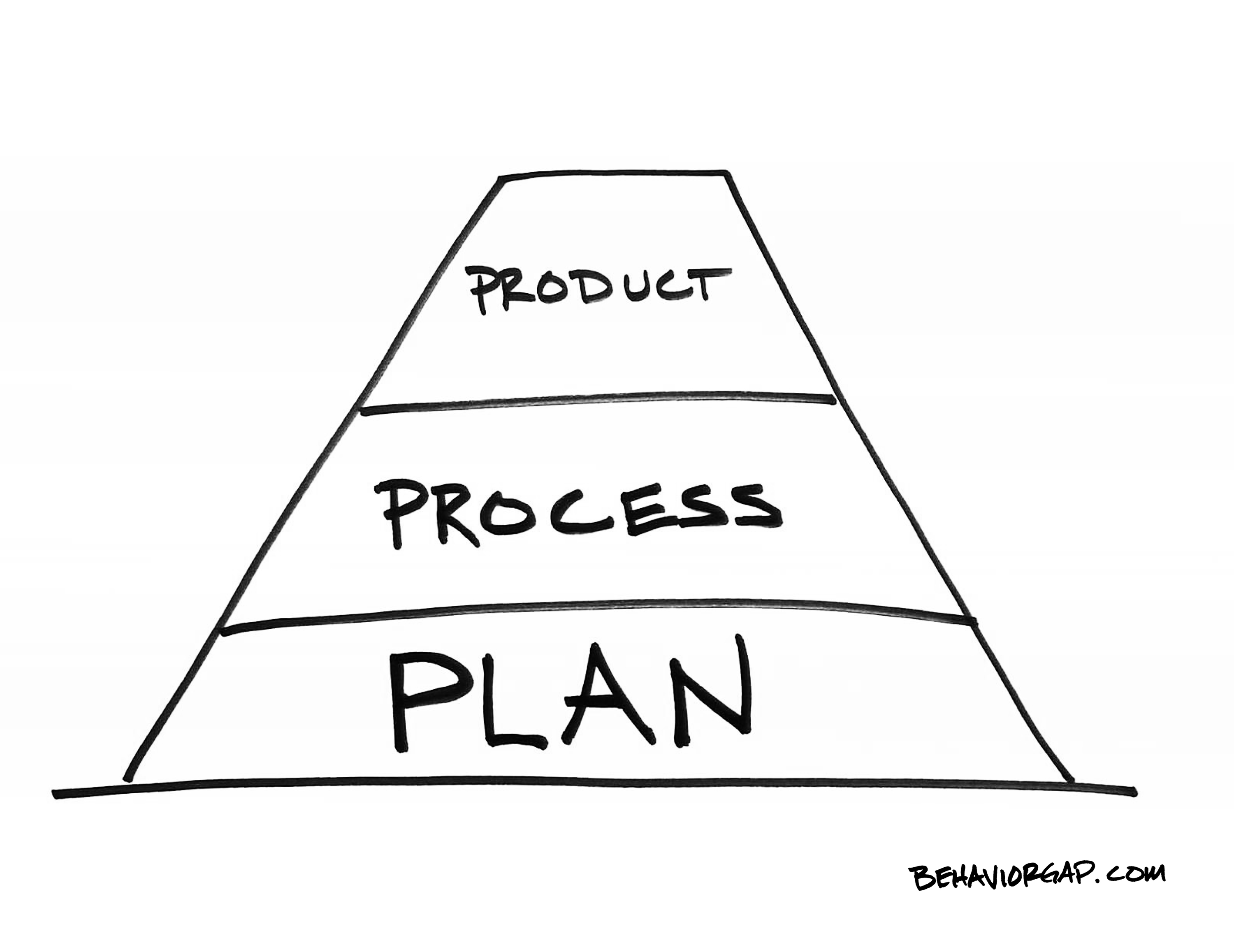
 Perhaps 95% of the consumers and professional advisors I meet with attempt to focus their discussion simply on the insurance policies they own.  Ours is a product focused culture, and our buying decisions are guided by products receiving 5 star reviews, Consumer’s Digest Best Buy recommendations, and / or finding a “good deal”.  The power of product advertising has robbed us of the ability to ask ourselves the larger questions.   Questions like “Why am I buying this product?”

Why buy insurance for your home?  Why buy insurance for your car?  When I ask these questions of my clients, I often receive an expression suggesting puzzlement, annoyance, or both.  To ease both emotions, I ask if the reason is to replace what they own in the event it were damaged or destroyed.  “Of course!” is the most common answer. 

Since the real reason to buy insurance is to replace what we own, why is “Save Money Now” the central theme in most insurance company advertising campaigns? Because advertisers have reminded insurance carriers that consumers respond best to “save money” offers.  To gain market share, they focus their ads on product, making save money the product.  Do consumers ever ask how the savings are being achieved?  Insurance carrier benevolence???  These campaigns are effective, and despite the “savings” provided to some consumers, these carriers earn a profit, content to sell products that often do not provide the desired protection.  All because no one ever asked “Why”.

Carl Richards, Contributor at New York Times Bucks Blog and the author of Behavior Gap, reminds us that in the financial services industry, consumer focus on product is exploited by those who are paid to sell product. Richards is well known for using illustrations that lend clarity to issues that many journalists do not understand. While the lesson of the illustration above is aimed at investors, it is just as relevant to those seeking the right way to protect their homes, cars and other assets from unforeseen loss. Richards explains: “Most of us are trained to think ‘What’ first, because it’s what you hear about all day long. It’s the message you read in financial publications and see on CNBC. But ‘What’ questions should come after we think about ‘Why’ and ‘How’ ….Starting with ‘Why’ means achieving clarity about your personal financial goals and creating a plan.” Thank you, Carl Richards, for reminding us that before we focus on the ‘what’ product solutions, we first need to start with asking ourselves the larger ‘Why’ questions. 

For more about Carl Richards work: http://www.behaviorgap.com/

Read Full Post »

This video on You Tube is part of a series that shows in vivid detail the remarkably customer centric protection and world class service available to all who insure their home with Chubb and experience a loss.

The vast majority of those I speak with believe that insurance products are a commodity — able to be differentiated by price alone. Sophisticated consumers know better. Meanwhile, only those who are unfortunate enough to experience a truly large loss have a first hand chance to examine the actual “worth” of the coverage provided by their policy. For claimants fortunate enough to be insured by Chubb, the well chronicled ”Chubb Difference” becomes very apparent, and as you will see, very quickly. This video is eye opening for those who think “all insurance is the same”.

A question: what insurance carrier do you want handling your claim, or a claim for your best client? Watch the video, and send it to those who wrongly think “all insurance is the same”.  

Read Full Post »

My father is adamant: each morning after the coffee has been finished, the coffeemaker must be unplugged. It seems a fireman told him 30 years ago they caused fires, lots of ‘em, and the O’Brien clan doesn’t like fire — not even in fireplaces.

Well, after paying a claim caused by a fire in one of their policyholder’s homes, Chubb has brought a lawsuit against Apple, alleging the house fire was the result of a faulty computer charger. The suit further alleges Apple had received numerous complaints alerting them to heating, burning and sparking problems with the MagSafe adapters used to charge Macintosh computers.

Unlike a Macbook, my father’s coffeemaker does not need charging, so un-plugging the coffeemaker when not in use actually IS a real option.  

A copy of the complaint is available here.

Read Full Post »

A former colleague and a Senior VP at Ace Private Risk Services has succinctly explained the “Five Steps For Getting The Best Protection From Your Insurance Agent”  in this two page article published in a recent edition of the Institutional Investors publication Private Asset Manager.

An excerpt: “Independent agents are skilled in asking questions about your lifestyle and interests. By better understanding the risks you face, along with your tolerance for risk, they can recommend a program which provides the best value – an ideal combination of customized insurance protection and affordable price.”   The article then instructs the reader on exactly what to ask your agent for, as well as what your agent should be asking and providing you. Make no mistake, each of the steps are essential. Meanwhile…..

IF after reading this article you are able to recognize that your agent is not already performing each of the five recommended steps, find a more skillful and dedicated agent.

Read Full Post »

If you were to key word search the term “hurricane forecast”, among the first entries you’d find is a reference to Dr. William Gray of Colorado State University.  To those of us who obsess about risk, Dr. Gray is quite the celebrity.  Each year Dr. Gray and his team of research scientists dares to announce how many hurricanes we can expect during the season.  For the 2010 Atlantic Hurricane Forecast, Dr. Gray and his Colorado State University staff are predicting 18 named storms, 10 of which are estimated to develop into hurricanes. They estimate a 76 percent likelihood that a major hurricane, with winds of 111 mph (178 kph) or greater, will strike the U.S. This figures represents a 24% increase over the average for the past century.  For those wondering why, few should be surprised to learn that meteorological conditions around the globe are optimal for hurricane development. Sea surface temperatures in the Lesser Antilles and off the western coast of the African continent are the warmest in recorded history. Combined with an absence of high altitude wind shear in the Atlantic Ocean,  Gray advises the 2010 season will be particularly active.

Unlike Dr. Gray and other climate experts, I can actually provide several GUARANTEES regarding this hurricane season: Whether a major hurricane makes landfall in the U.S. or not, the vast majority of Americans will elect not to prepare for one. Rather than take precautions, most Americans will simply gamble that their homes, possessions and families will remain safe from natural disaster. Many will be correct, but some will be wrong.  Buta select few will make sure they are prepared for a natural disaster and will have a plan in place, just in case. Do you need help on how best to prepare for a hurricane? I can provide clear guidance and a list of available solutions and resources, but I cannot help unless you let me.  Call me or send me an e-mail.

Read Full Post »

I admit it: I read insurance industry trade publications. Lots of them.  I read all sorts of real cool stuff about this fascinating insurance industry. Every now and then, even my family will find one of the stories of interest.

Stories like this one:  researchers at the National Federation of the Blind and Virginia Tech working to make driving an automobile a reality for those who are blind.  Don’t believe me?  From those zany editors at Insurance Journal, check this link to read the entire story.

Read Full Post »

I cringe each time I see major insurance carriers advertising their coverage using “save ___% in __ minutes” or “name your own price” deceptive sales pitches. Most sophisticated consumers understand that in order to significantly lower insurance costs, certain sacrifices in protection (known or unknown) lurk somewhere in the fine print.

Meanwhile —- there IS a way to purchase high limit personal excess liability (often referred to as “umbrella” coverage) at costs between 30 and 50% below the prevailing market costs. Often, coverage enhancements can be included that even expand the protection normally available with such policies. More coverage at a lower cost —– but how?

As always, there is a “catch”: more protection for less money can be arranged only when carriers are presented with a large enough group of applicants who comprise an eligible “Group”. “Group Personal Excess Liability” (GPEL) is a concept that has been around for decades, and is regarded as a valuable voluntary benefit at many large corporations.

The leading underwriters for this product are Chubb, CNA, Chartis, Fireman’s Fund and Ace. The differences in eligibility, costs, and coverage features offered by each carrier are subtle, yet important. Generally, the program is most successful in a workplace with a group of 10 or more participants seeking liability limits of $5 million or more. For larger groups, the coverage enhancements, ease of enrollment and cost discounts can become very meaningful. I’d be happy to have a conversation to help you examine whether this program can benefit you and others you know, or clients you advise.

Read Full Post »

The International Risk Management Institute (IRMI) is regarded by many as the premier authority in providing expert advice and practical strategies for risk management, insurance, and legal professionals.  

I was honored when Robin Olson, the principal research analyst for IRMI’s Personal Risk Management and Insurance practice contacted me and asked me to provide a peer review for an article he was preparing for a leading insurance industry trade publication, The CPCU e Journal, published by the CPCU Society.  This 18 page white paper, Personal Lines Insurance Coverage Gaps – Analysis and Resolution, was written to educate insurance and risk management professionals, and offers very detailed insights into this very broad topic. 

While this article is surely not recommended late night reading, several insurance-geek friends of mine have called to congratulate me for my work being cited (on pages 2, 4, 7, 9, 16, 17 and 18) with the likes of Freakonomics authors Steven Levitt and Stephen Dubner as a research source for this paper. 

Let me know if you actually read all 18 pages, and I will write a check to the charitable organization of your choice for your interest and efforts!  Meanwhile, please realize that if it takes 18 pages to educate insurance professionals on the common gaps in protection, then it requires a lot of close attention to many details for insurance professionals to design and manage a well crafted insurance program. 

Read Full Post »

Co-authored by security experts Douglas R. Kane and Paul Michael Viollis, Sr., Ph.D. Silent Safety is a must read for those who provide counsel to affluent and highly affluent clients. Subtitled “Best Practices for Protecting the Affluent”, this great new book reminds us that as the financial crisis continues to make headlines, the hidden dangers facing many affluent families are often largely ignored. Despite the fact that significant wealth attracts considerable unwanted attention and exposure for many families, the appropriate countermeasures are often only implemented after costly, disruptive or embarrassing events unfold.  The authors offer many solutions to avoid this scenario.

The authors’ firm – Risk Control Strategies (RCS) – is a leading threat management, investigative and security consulting firm specializing in serving the affluent community, corporations and governmental agencies. Silent Safety serves as a personal security best-practices reference tool for affluent families and their trusted advisors. The book shines a spotlight on the many risks facing affluent families every day. Silent Safety provides pragmatic advice and strategic countermeasures that can be immediately deployed to contain a crisis, as well as recommendations to preemptively mitigate risk. This book will provide the reader with Risk Control Strategies’ proven methodology for protecting the wealthy and providing them with peace of mind.

To more closely examine the RCS suite of security services, visit their web site at www.riskcontrolstrategies.com  To request more information about Silent Safety, contact silentsafety@sandowmedia.com.

Finally, should you wish to meet with one of the partners of this fine firm, please contact me and I will arrange an introduction.

Read Full Post »

« Newer Posts - Older Posts »