Feeds:
Posts
Comments

chubbAsk someone familiar with branding this question, and they will explain a person’s or organization’s name conveys a brand.  Good, bad, or unfamiliar, names convey a brand.  Donald Trump and Colin Powell.  Two very different brands.  Ritz Carlton and Hotel 6.  Again, two distinctly different brands.   Coke and Pepsi. Two brands that are quite similar. John Public and Mary Doe? Nothing — I don’t know them either. Now, consider these two prominent insurance companies: Ace and Chubb.  I view Ace and Chubb as very similar and very different.

Among the ways Ace and Chubb are very similar: financial performance.  According to Fitch Ratings: “For the five-year period 2010-2014, ACE’s average consolidated GAAP combined ratio was 91 and the operating return on equity was 12 percent. Chubb’s average combined ratio and operating return on equity for the same period was 91 and 13 percent, respectively.” That’s pretty similar.

Among the ways Ace and Chubb are very different: how their brands are perceived. Says Ace Chairman and CEO Evan Greenberg: “The combined global operation will operate under the Chubb name, an acknowledgement of the distinctiveness and recognition of its brand, particularly in the U.S.”   

Recognizing the importance of “what’s in a name”, Ace, the acquiring company, has shown the wisdom of moving forward using the acquired company’s brand.  Ace will re-brand as Chubb, the ultimate compliment. Those who question the importance and value of a brand should take note — and believe in the power of the Chubb brand.

Not knowing the right questions to ask about your insurance protection isask wrong among the key reasons far too many consumers hear the dreaded words “you are not covered” at the worse possible time — after a personal property or liability insurance loss.  Following are examples of frequently asked questions many consumers ask when making important decisions about their insurance protection:

  1. Am I “fully covered”?
  2. Can you lower my premiums?
  3. How much liability insurance do I really need?
  4. Do I have coverage for losses caused by hurricanes?
  5. Do I have coverage for the renovations / additions to my home?

While these questions are all valid and worthy of answers, there are many far more important to questions to ask to make sure your insurance program is providing the level of protection you will want in effect should you experience a significant loss.  For starters, consider what you might learn from the answers to these questions:

  1. In addition to the risks I am covered for, what are the risks I am not currently insured for?
  2. Are there any coverage gaps, policy exclusions or forms of coverage that have not been not offered that are exposing my assets to uncovered property or liability losses?
  3. How does the claims settlement process differ among insurance carriers?
  4. Are there effective strategies to control the cost of coverage without requiring me to sacrifice important protection?
  5. What services are available to help prevent or reduce the risk of loss?
  6. What can I do now to ensure the best outcome in the event of a large property or liability loss?

So whose job is it to help you know the right questions to ask so that you can reduce the risk of experiencing an uncovered loss? Consumers should seek insurance advice from independent insurance agents who serve their clients as risk advisors by offering insightful answers to the many important questions that are often never asked . Think risk-coach, and not someone who is simply skillful at using clever selling techniques.

To learn whether you are working with an insurance agent who is truly focused onhelping you make well informed decisions to properly manage your risks, here’s a good question to ask that person: “Are there other questions I have not asked that could help you better assess my exposure to uncovered losses?”  The answer you receive can help you determine if the person whose job it is to help you understand and manage your risks is actually focused on that objective. If they are not, it then becomes your job to find one who is.

sag flood sceneFEMA provides a very helpful online tool that allows consumers to complete three easy steps to find the important flood hazard data for virtually any given property.

Click here for a link to a FEMA site to see the flood risk data for ANY location that can be found on their highly interactive map.

Are there viable risk management strategies that can reduce the extent of damage should flood water enter your property? YES —– check the following link to learn more about the many benefits of installing foundation flood vents:  http://smartvent.com/howwhatwhy 

Contact me if you would like to be introduced to an independent insurance and risk advisor in your state who has local expertise in helping consumers better understand their exposure to flood damage, control the associated costs of flood insurance, and adopt loss mitigation strategies to reduce the impact of a flood.

CXWhat was once old is new again.  With all the expensive new studies on “Customer Experience” for sale, consider these free yet profound words from many years ago on CX from Miss Manners:

“True service can only be provided by thinking people who have the imagination to put themselves in the place of the customer, figuring out what he needs and how it can most easily be done, and who have the largesse and grace to be pleasant about it.”

Thinking. Imagination. Figuring out. Easily. Largesse. Grace. Clearly great customer service is more involved than a smile, answering the phone by the third ring, making sure invoices go out and hanging a nice mission statement in the lobby. But it isn’t rocket science, either.

Is it really that difficult to find “thinking people who have the imagination to put themselves in the place of the customer” to assist with your insurance program?  The implications of this statistic from an industry study suggest it sure can be: while 85% of personal lines customers believe having professional standards met by agents is important, only 30% of independent agents surveyed thought consumers cared about such standards. Clearly, more than a few insurance agents don’t know to put themselves “in the place of the customer”.  Fortunately, there are others who do!

The key is to become aligned with an insurance agent who views their own service standards and performance from the perspective of the clients he / she serves.  Are you working with an insurance agent who is truly delivering a consistently exceptional customer experience? If not, I can provide a confidential recommendation to highly experienced independent insurance professionals who meet the above criteria.

UGWUP4There are a number of policy provisions and claims settlement procedures that enable many car insurance carriers to reduce the costs to repair a damaged vehicle. 

A recent report by CNN explains many car repair shops accuse auto insurance companies of coercing them to use cheap parts and sometimes dangerous practices to fix vehicles involved in accidents.  I encourage you to examine this report, and to contact us me learn why it is important to consider the many benefits of insuring your vehicles with an insurance carrier that provides coverage for repairs using OEM (original equipment of the manufacturer) parts.  Click this link to read the CNN Report

According to researchers from the U.S. Geological Survey, more than 143 million people residing in the lower 48 United States are vulnerable to earthquakes. The risk for those on the Pacific coast is well known, but those residing in the Rockies, Midwest, New England and parts of the Southeast also face an elevated risk. More alarming is the fact the study does not factor in earthquakes attributed to oil and natural gas “fracking” activities. While the U.S. Geological Survey site is very technical, we offer this link that summarizes their recent findings should you wish to learn more.

We share the news of this report not to create undue alarm, but as a reminder that homeowners insurance policies do not provide coverage for damage to your residence that is caused by earth movement.  As with most risks, insurance coverage for earthquake and other earth movement is available and worth considering.   To learn more about your options contact your personal risk advisor.

One of the more thoughtful bloggers I’ve discovered recently is Don Shaughnessy.  In this insightful post, https://moneyfyi.wordpress.com/2015/04/03/9285/  Don reminds readers all too often, consumers are lured by marketers into asking the wrong questions, and in the wrong order.  It prompted me to re-post below a similar message I learned 4 years ago from Carl Richards:

Perhaps 95% of the consumers and professional advisors I meet with attempt to focus their discussion simply on the insurance policies they own.  Ours is a product focused culture, and our buying decisions are guided by products receiving 5 star reviews, Consumer’s Digest Best Buy recommendations, and / or finding a “good deal”.  The power of product advertising has robbed us of the ability to ask ourselves the larger questions.   Questions like “Why am I buying this product?”

Why buy insurance for your home?  Why buy insurance for your car?  When I ask these questions of my clients, I often receive an expression suggesting puzzlement, annoyance, or both.  To ease both emotions, I ask if the reason is to replace what they own in the event it were damaged or destroyed.  “Of course!” is the most common answer.

Since the real reason to buy insurance is to protect and restore our tangible and / or financial assets in the even of an unforeseen loss, why is “Save Money Now” the central theme in most insurance company advertising campaigns? Sadly, it is because advertisers have reminded insurance carriers that many consumers respond to “save money” offers.  To gain market share, they focus their ads on product, making “save money” the product.  Do consumers ever wonder how the savings are being achieved?  Insurance carrier benevolence???  These campaigns are effective, and despite the “savings” provided to some consumers, these carriers earn a profit, content to sell products that often do not provide the desired protection.  All because no one ever asked “Why”.

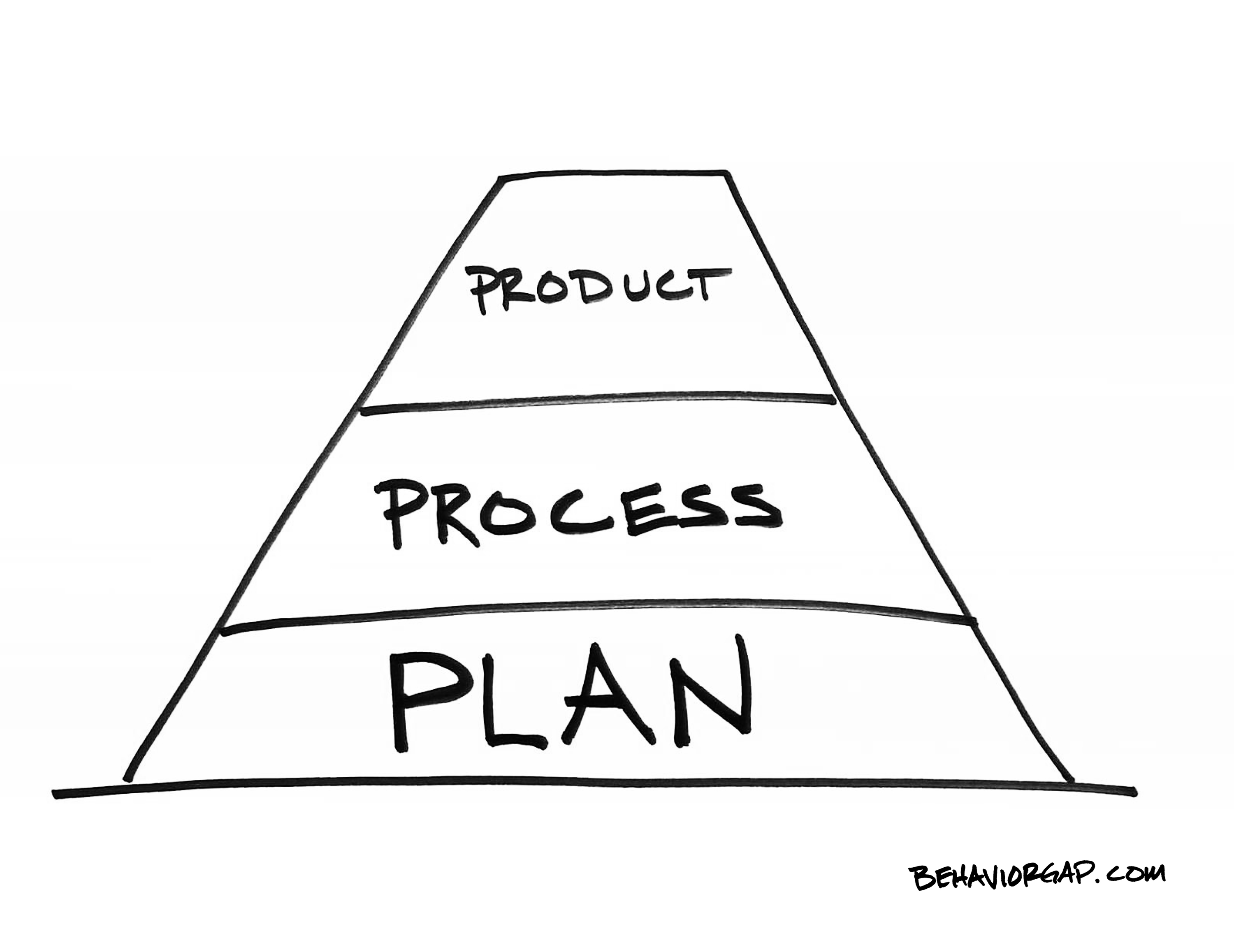
Carl Richards, Contributor at New York Times Bucks Blog and the author of Behavior Gap, reminds us that in the financial services industry, consumer focus on product is exploited by those who are paid to sell product. Richards is well-known for using illustrations that lend clarity to issues that many journalists do not understand. While the lesson of the illustration above is aimed at investors, it is just as relevant to those seeking the right way to protect their homes, cars and other assets from unforeseen loss. Richards explains: “Most of us are trained to think ‘What’ first, because it’s what you hear about all day long. It’s the message you read in financial publications and see on CNBC. But ‘What’ questions should come after we think about ‘Why’ and ‘How’ ….Starting with ‘Why’ means achieving clarity about your personal financial goals and creating a plan.” Thank you, Carl Richards, for reminding us that before we focus on the ‘what’ product solutions, we first need to start with asking ourselves the larger ‘Why’ questions.

For more about Carl Richards work: http://www.behaviorgap.com/

Premiums received from all drivers are used by insurance carriers to pay the disproportionate claims caused by bad drivers, which creates a cost impact even for safe drivers.

To better understand just how inept some drivers are, check this video from You Tube:   https://www.youtube.com/watch?v=Z7FqHJh6Ty4

Check the link below for a great report by NBC News: Security experts warn that cyber criminals are setting up fake WiFi hotspots, luring consumers to hand over the keys to their computers. And travelers are falling for this at an alarming rate. BeAware!

http://www.nbcnews.com/nightly-news/video/how-to-protect-yourself-against–free-wifi–scams-415603779813

risk gameToo many insurance agents are happy to recommend a specific insurance policy without first helping consumers to examine and understand their actual risks. As always, buyers should beAware!

Savvy consumers should ask this question before purchasing an insurance policy: if I do not understand what my risks are, how can I possibly know if the policy that is being recommended provides the risk protection I need?

Helping consumers to first understand their risks is the cornerstone of a good private risk advisory practice. As a result, I am always on the hunt for tools that can help others better understand PERSONAL RISK.

The Consumer Risk Index documents the survey results complied by The Travelers that provides insight into the types of risks that individuals and families worry most about. The index provides some interesting insights and trends that can be used to help consumers take practical steps to better manage their risks. Check the link below to learn more, or simply send me an e-mail if you would like to receive a free a copy of the Consumer Risk Index report compiled by Travelers.
https://www.travelers.com/prepare-prevent/home/risk-index.aspx