Feeds:
Posts
Comments

The old adage “the calm after the storm” does NOT ALWAYS apply after a hurricane has caused significant damage.  

Understanding that we are all focused on making advance preparations for Hurricane Irene’s arrival, several I spoke with yesterday asked me what they should be doing AFTER the hurricane passes.   While many of these suggestions are common sense, I offer them as a reminder, and encourage you to know in advance what to do after the storm has passed.  

• If you have evacuated, wait until authorities tell you it’s safe before returning home.

• Be alert for tornadoes.

• Stay away from flood waters.

• Use a flashlight. Do not light matches or turn on electrical switches.

• Sniff for gas leaks. If you smell gas or suspect a leak, turn off the main gas valve, open windows and evacuate. If you have any concerns, have the gas system checked by a professional.

• Do not touch wires or outlets.

• Check for frayed cords and for cracked or broken prongs and plugs.

• Turn off the main electrical circuit switch. Be careful to stand on a dry surface and do not touch the metal handle of the switch box. Use a piece of heavy rubber, plastic or a piece of dry wood to open the metal door and throw the switch. Share your concerns with a licensed electrician.

• Watch for holes in the floor, loose boards or hanging plaster.

• If your home has been flooded, check for snakes and other animals that may have entered the property.

• Before you start cleaning up debris, prepare an inventory of all damaged or destroyed personal property. If you can, videotape or photograph the damage.

• Make temporary repairs to prevent further damage.

• Clean up any flammable or poisonous materials that may have been spilled.

• Dispose of all spoiled food immediately. If you have insurance coverage for spoiled food, document your losses.

• Hold off on permanent repairs until you’ve received approval for reimbursement.

• Save remnants of damaged or destroyed property for your insurance company adjuster, and do not sign agreements with contractors or anyone else until you have a chance to meet with your insurance adjuster.

• Keep a written record of everyone you talk to about your insurance claim, including the date of the conversation and a summary of what was said.

• Keep all receipts.

• Your pre-disaster home inventory will be of great assistance to you at this point. After you’ve examined everything and determined the extent of damage, call your insurance agent “as soon as possible” to file a claim.


 

A colleague just shared with me that she felt ill-prepared for a hurricane, and sought some advice.  Offering such advice can be problematic, as I never know quite where to start. For example, I sure don’t want to be the guy who reminds others to have the obvious items —- bottled water, batteries, flashlights, etc.  Turns out my friend was not even sure she had any flashlights in her house.  I told her she might want to get one or two, and reminded her most require batteries.

This column is focused on the less obvious risk management lessons that I have learned from those in FL who have offered their valuable lessons having endured numerous hurricanes.  For example:

  • Wind will enter a home through the most vulnerable area, and that area is often the large exterior door of an attached garage.  Once winds enter a garage, they cause an “uplift” on the ceiling, creating pressure that removes the roof of the garage that often enable winds to enter the interior of the home. 
  • Since it is hard to know whether the door is inherently strong enough to resist hurricane force winds, steps should be taken to fortify it.
  • Consider parking the cars inside the garage so that the rear bumper abuts the garage door. Many in FL fortify their garage door with ply wood, 2 x 4 reinforcements, etc. to prevent the door from collapsing and wind from entering.
  • If you do not already own one, it may be a bit late to buy a generator locally.  Meanwhile, it may not be too late: all who use Amazon should be aware that the best way to assure fastest delivery is to select Amazon as the seller, and not one of the other resellers who market on their site. Many generators can be purchased from Amazon with a one day delivery option.  
  • For those with generators, it’s a good idea to test it to ensure it is operational, and to make sure there is ample fuel.
  • A comedian once observed that the danger in hurricanes is not THAT the wind is blowing, rather the danger arises from WHAT the wind is blowing. Please be sure to bring inside all that is outside that can be hurled through your windows!  Do not forget easily overlooked items like gas grills, portable propane tanks, and picnic tables.
  • Expect power surges before an outage, and unplug vulnerable electronic equipment.
  • For a much more complete list of suggestions, your tax dollars are hard at work providing this information: http://www.ready.gov/america/beinformed/hurricanes.html

Think about the insurance advertisements you have recently seen on TV and in print. Most emphasize this flawed and glib message: the smart way to buy insurance is from the company providing you with the lowest cost. One carrier even encourages you to “name your own price.” To be sure, these are clever, entertaining, and persuasive pitches. Meanwhile, directing consumers to prize “low cost” above all other factors is irresponsible pandering that can result in huge problems after a loss.

Compounding this shell game advertising ploy by insurance carriers is the sad fact that many of those who know better — the agents and brokers who understand insurance and need to properly guide consumers — also slyly insert “save money now” as a theme in marketing their value proposition. One agency with a national footprint reduces the complex inter-relationship between price and insurance value with this gem: “We have yet to meet a person who is insensitive to insurance pricing.™” Yes, that is a trademark; proud of a keen ability to observe the obvious, this agent is apparently concerned other agents might actually steal this profundity (aspiring Mad Men be forewarned: we insurance folk sure know how to craft pithy advertising copy).

Instead of PRICE, look to focus on VALUE: To better convey the inter-relationship between pricing and insurance protection, here’s something to consider: insurance agents and brokers are insurance consumers as well, and while “not insensitive to insurance pricing”, we also know that “pricing” is just one of the factors to be considered when making an informed decision when buying insurance for ourselves. As a result, no insurance professional I know is overly sensitive to insurance pricing, since we understand the allure of low cost coverage entails some manner of sacrifice in protection and /or service. After all, does anyone believe the insurance carriers who are advertising “low cost” coverage are reducing their costs because they are more benevolent than other carriers? It is noteworthy that the insurance carrier that helps consumers “save 15% in 15 minutes” is also among the most profitable insurance carriers in the world. Rather than focus on price, my commitment is to help consumers better assess the value of insurance coverage. While doing so would make for a VERY boring advertisement, I am willing to be labeled boring by remaining an advocate of helping consumers to learn the more important questions to ask before buying insurance. For starters:
• What are the other factors besides price to consider when buying insurance?
• What inside information do insurance professionals use to help them buy insurance coverage that is both effective and cost efficient?
• What non insurance strategies do insurance professionals use to reduce the cost of insuring their risks?
Insurance pricing is important, but understanding the real value of the insurance being considered is much more important. Let me know if you or those you know would like the perspective of an insurance insider to discern between price and value.

I wish to remind all consumers that developing a plan to effectively manage the risks of a stolen identity is a critical part of any personal risk management program. Where to start? First, a few words of caution on where not to start. Beware of the large number of organizations offering to sell “identify theft protection services” to individual consumers. Continue Reading »

PrivateRiskAdvisor
Perhaps it is the result of growing up in a household that regarded “Murphy’s Law” as gospel —- but I am almost manic in expecting (and preparing for) the unexpected.  While the “unexpected” does not occur to any of us with great frequency, when “it” does I am rarely caught off guard, or without a plan on how to address it (whatever it may be).  This “be prepared for the sky to fall” tendency has earned me many nicknames, none of which are ever intended as a compliment.  According to the online test “Are You a Worry Wart”, my score, while not off the charts, does suggest I am naturally inclined to help others at least consider preparing for the wide range of risks that those who are not “worry warts” are neither concenred about nor often even aware of.   You want me worried. You NEED me worried.

So my latest worry – for you, and all who you know – is what can happen to all of the data on your smartphone should your phone ever become stolen or misplaced.  Why this issue?  Because I not only recently lost my iPhone, but much worse, I had no plans in place to protect the data that was on it from mis-use.  I make this admission with great shame, and can assure all my friends and family are having great fun at my expense. While this blunder has cost me several nights sleep, I have learned from my mistake, and you can too.  Of course, you can also just resolve to never lose your smartphone (or have it stolen).  That did not occur to me….  

Although I did not know WHAT steps to take to secure the large amount of personal data on my phone (it had NO client info!!), I did know WHO to turn to for expert guidance.   I met Ondrej Krehel of Identity Theft 911 awhile ago through an introduction arranged by Chubb.  Krehel and his colleagues provide highly customized identity protection and data risk management solutions for a wide range of business and organizations.  Identity Theft 911 has a great website that features a “Knoweldge Center” full of valuable insights.  Of course, this firm can be of greatest assistance to the organizations they serve when they have the opportunity to provide their services before an intrusion occurs.  Similarly, while Krehel also authors a great blog full of helpful ideas, I only wish I had learned about how he can help me protect my data before I lost my iPhone

I encourage EVERYONE who has not lost a smartphone to review the “low tech” and “high tech” suggestions Krehel offers on what can be done to protect your data before it is ever lost or stolen.  Use this link to read “Your Smarter Smartphone” posted on Krehel’s blog, and be sure take the time to view his many other insightful posts.   Should you wish to learn more about Identity Theft 911 and the wide range of their capabilities, I’d be happy to arrange an introduction.

I am happy to report I do not have any clients with homes in Japan. Meanwhile, several clients who I’ve spoken with the past few weeks were surprised to learn that all unendorsed homeowners insurance policies issued in the U.S. specifically exclude damage caused by, that’s right, earthquake, tsunami (flood) and damage from a nuclear facility. 

If the threat of any of any of these risks concerns you, there is good news: insurance protection from damages caused by earthquake and flood is readily available, and generally not very expensive (costs are much higher for those with homes located near a seismic fault or prone to flood waters). Please let me know if you’d like to understand the coverage options available to protect your property from earthquake or flood damage.

While I am unaware of any insurance carrier offering to sell coverage to protect against nuclear damage, the Price-Anderson Act, passed in 1957, is in place to compensate the public for property damage and injury caused by a commercial nuclear accident in the United States.  The program, renewed by Congress most recently in 2005, ensures that adequate funds are available to satisfy liability claims for property damage and personal injury sustained by the public. The program limits the liability of companies involved in certain nuclear activities, such as power plant operators, in order to encourage the development of private nuclear power. Currently, there is nearly $13 billion in liability insurance protection available to be used in the event of a commercial nuclear accident.  This program paid about $71 million to local residents and businesses impacted by the Three Mile Island accident in 1979.

 Perhaps 95% of the consumers and professional advisors I meet with attempt to focus their discussion simply on the insurance policies they own.  Ours is a product focused culture, and our buying decisions are guided by products receiving 5 star reviews, Consumer’s Digest Best Buy recommendations, and / or finding a “good deal”.  The power of product advertising has robbed us of the ability to ask ourselves the larger questions.   Questions like “Why am I buying this product?”

Why buy insurance for your home?  Why buy insurance for your car?  When I ask these questions of my clients, I often receive an expression suggesting puzzlement, annoyance, or both.  To ease both emotions, I ask if the reason is to replace what they own in the event it were damaged or destroyed.  “Of course!” is the most common answer. 

Since the real reason to buy insurance is to replace what we own, why is “Save Money Now” the central theme in most insurance company advertising campaigns? Because advertisers have reminded insurance carriers that consumers respond best to “save money” offers.  To gain market share, they focus their ads on product, making save money the product.  Do consumers ever ask how the savings are being achieved?  Insurance carrier benevolence???  These campaigns are effective, and despite the “savings” provided to some consumers, these carriers earn a profit, content to sell products that often do not provide the desired protection.  All because no one ever asked “Why”.

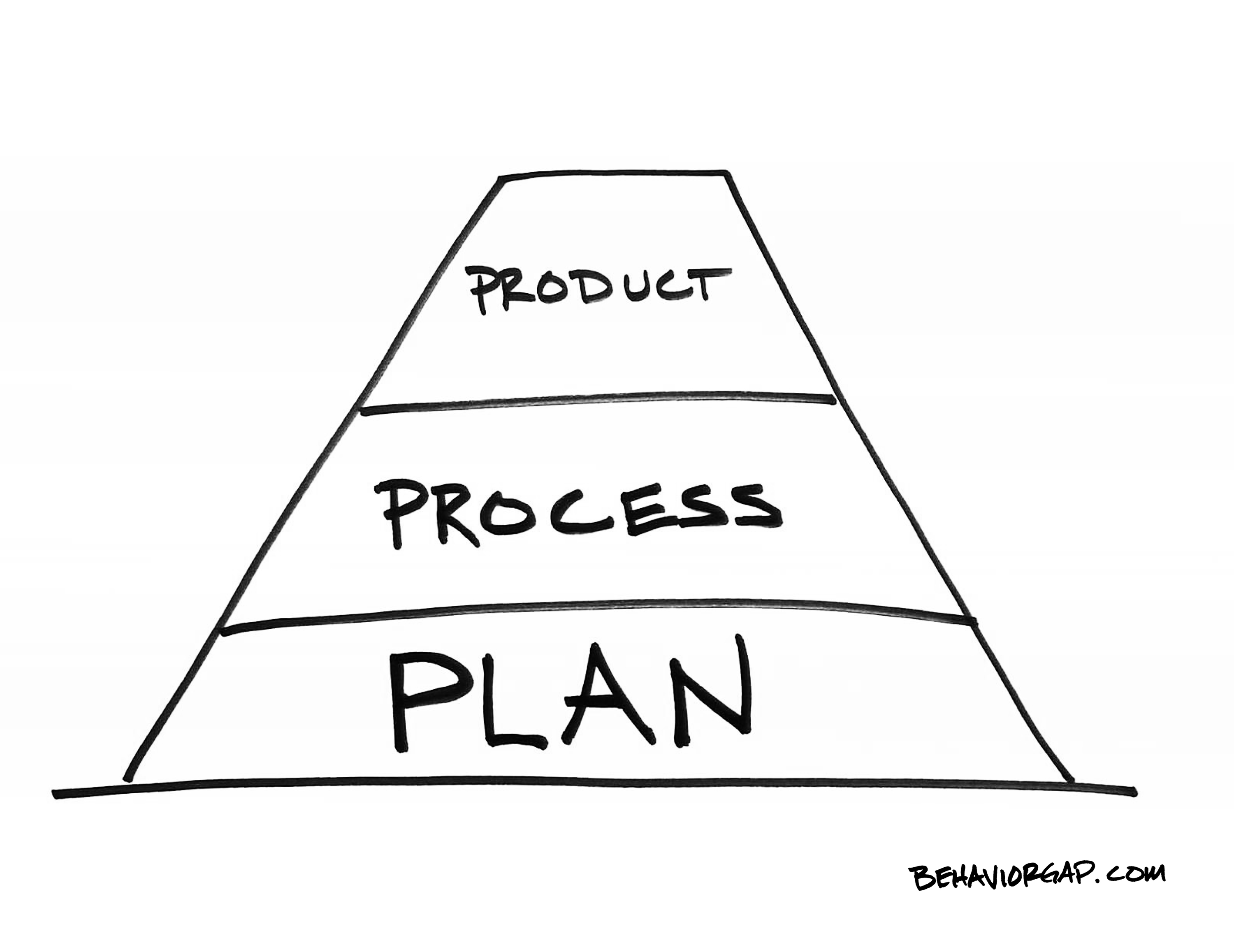
Carl Richards, Contributor at New York Times Bucks Blog and the author of Behavior Gap, reminds us that in the financial services industry, consumer focus on product is exploited by those who are paid to sell product. Richards is well known for using illustrations that lend clarity to issues that many journalists do not understand. While the lesson of the illustration above is aimed at investors, it is just as relevant to those seeking the right way to protect their homes, cars and other assets from unforeseen loss. Richards explains: “Most of us are trained to think ‘What’ first, because it’s what you hear about all day long. It’s the message you read in financial publications and see on CNBC. But ‘What’ questions should come after we think about ‘Why’ and ‘How’ ….Starting with ‘Why’ means achieving clarity about your personal financial goals and creating a plan.” Thank you, Carl Richards, for reminding us that before we focus on the ‘what’ product solutions, we first need to start with asking ourselves the larger ‘Why’ questions. 

For more about Carl Richards work: http://www.behaviorgap.com/

This video on You Tube is part of a series that shows in vivid detail the remarkably customer centric protection and world class service available to all who insure their home with Chubb and experience a loss.

The vast majority of those I speak with believe that insurance products are a commodity — able to be differentiated by price alone. Sophisticated consumers know better. Meanwhile, only those who are unfortunate enough to experience a truly large loss have a first hand chance to examine the actual “worth” of the coverage provided by their policy. For claimants fortunate enough to be insured by Chubb, the well chronicled ”Chubb Difference” becomes very apparent, and as you will see, very quickly. This video is eye opening for those who think “all insurance is the same”.

A question: what insurance carrier do you want handling your claim, or a claim for your best client? Watch the video, and send it to those who wrongly think “all insurance is the same”.  

It is no secret that financially successful families are often early adopters of all the new must-have home technology products rushed to market each holiday season.  What few early adopters realize is the degree to which many of these new products provide new and easy opportunities for those in the “hacking community” to run familiar scams to steal identities, credit card information, etc. In a Dec 26 article titled Gadgets Bring New Opportunities for Hackers, The New York Times provides great insights on how many new technology products are exposing consumers to this growing risk.

Love your i Phone and i Pad?  The Wall Street Journal reported Dec 18 that many popular apps for both products help to share user data widely and freely without the user’s knowledge. It seems Apple assigns a Unique Device ID to the devices it sells that enable others to track how the devices are used.  This article in the Dec 28 edition of The New York Times by Reuters summarizes the class action lawsuits Apple is facing.  

With all of this unsettling news, consumers should minimally examine the protection they are provided by their insurance program for the risks of identity theft and restoration.  Extra attention for taking prentative steps should also be considered.

A client who had been insured by a well known carrier recently asked if there wasn’t “any other carrier out there” that could also offer broad coverage for his large home “that didn’t charge an arm and a leg”. I explained that his carrier’s rates reflected their overall loss experience, and reminded him of a claim that he had many years ago and how happy he was with the outcome. Pressing his point, he asked if there were any carriers that had “better loss experience” so that they were able to price their coverage at a lower cost.  Enter a new carrier I’ve written about frequently here – Pure High Net Worth.

This excerpt is form a recent professional journal assessing the marketplace for high valued home insurance summarizes the opportunity: “However, there is some competition out there for these big players. For instance, a relatively new company from Florida called Privilege Underwriters Reciprocal Exchange (PURE) is making a big splash on the East Coast right now.  PURE offers similar features to Chartis and Chubb, and is very open to coastal properties where others are more restrictive in coastal areas.”

When my client reviewed the terms of Pure’s offer, he asked how the costs could be appreciably lower given the very similar coverage. I explained that because Pure was just beginning to add new risks, they had not yet experienced many losses, adding that Pure’s risk selection process relies heavily on credit scoring, which they believe will help attract policyholders who better manage their finances and their homes. The client shared that he regards this as a de-facto “sale” on home insurance, and told me I should explain it in such terms to others.

Well —– although insurance carriers do not have “sales”, it is fair to observe that new carriers entering the marketplace without the burden of prior losses and who also carefully select the risks they insure are able to price their policies at rates that can give the impression they are on “sale”.  For those who find the idea of a “sale on insurance” appealing, please contact me to examine an offer from Pure.  Meanwhile, as an independent risk advisor, my advice on “who the best carrier is” remains unchanged:  it is whichever carrier best meets that particular client’s specific protection needs.